Pipeline Architecture
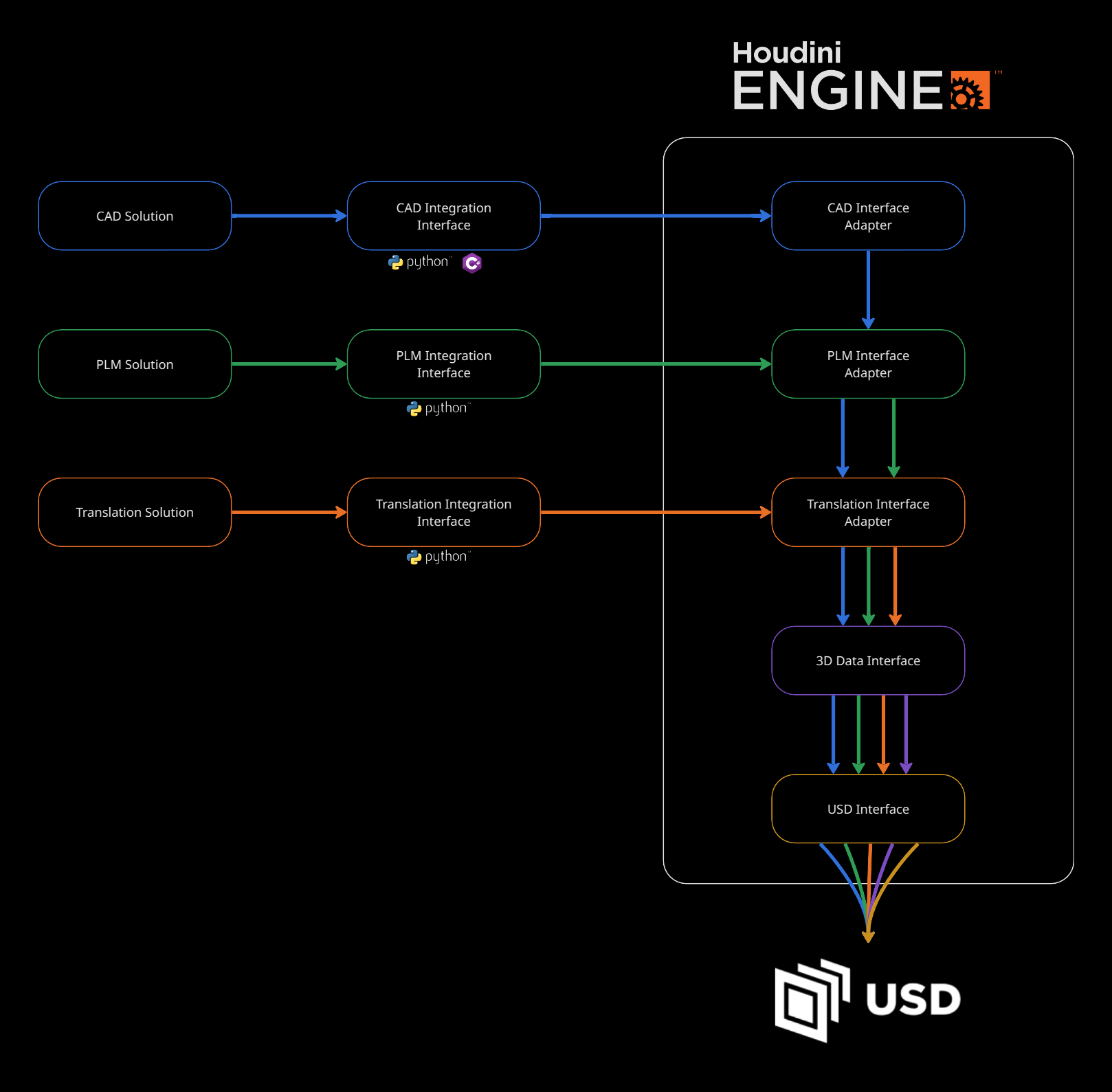
High-level view of the current production pipeline system I develop and maintain. Multiple upstream sources flow into Python-driven services and tooling, orchestrated via PDG, and converge into USD as the master archive.
Data Flow
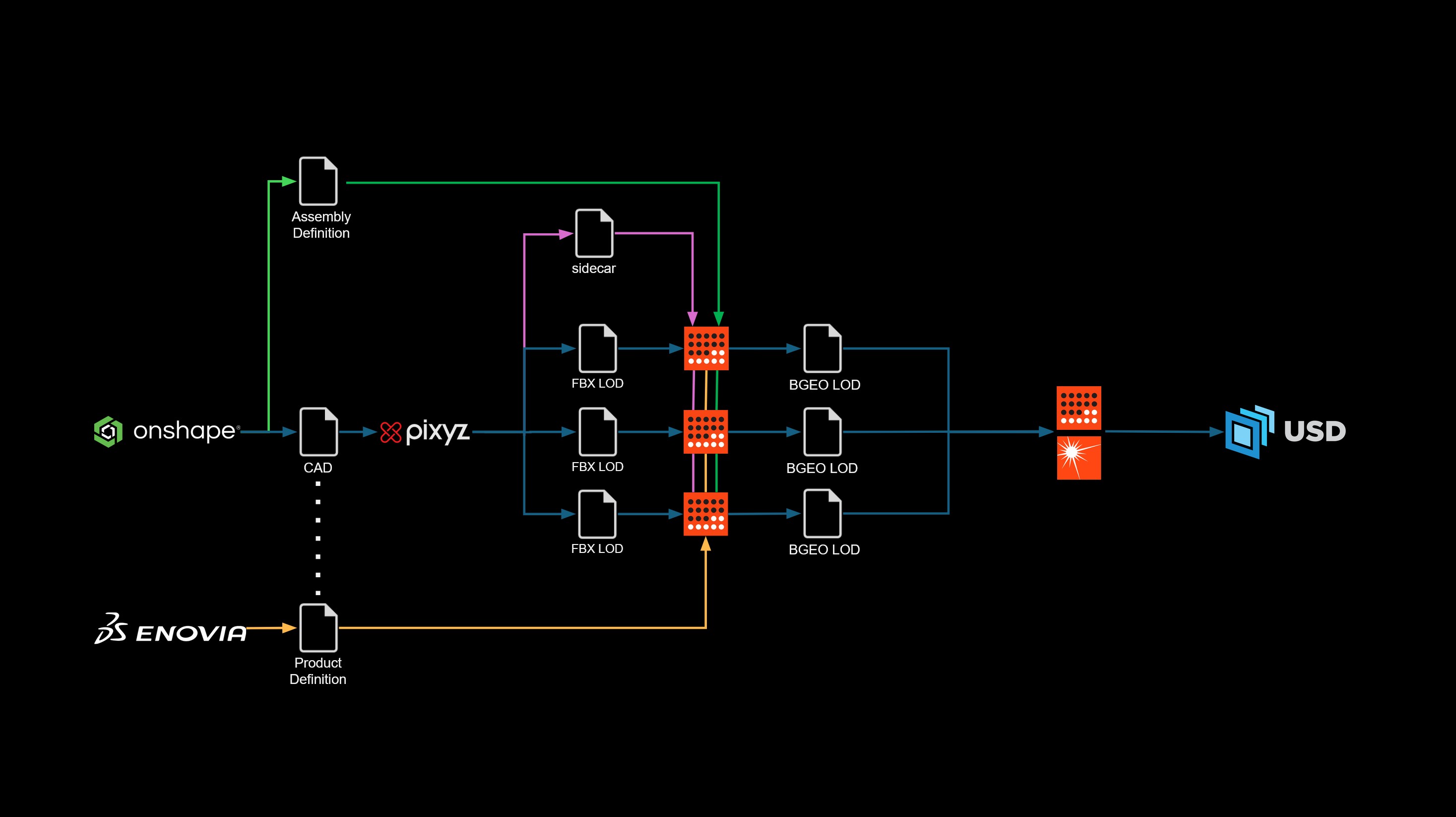
The pipeline is designed around deterministic regeneration. Source CAD and PLM metadata are ingested, normalized, processed, and published into a structured USD representation that supports multiple consumers. Every build is versioned, repeatable, and traceable back to CAD and PLM sources.
Backend Processing (Video)
Short clip showing the pipeline running end-to-end: orchestration, task execution, and deterministic publishing.
PLM Enhanced USD Data
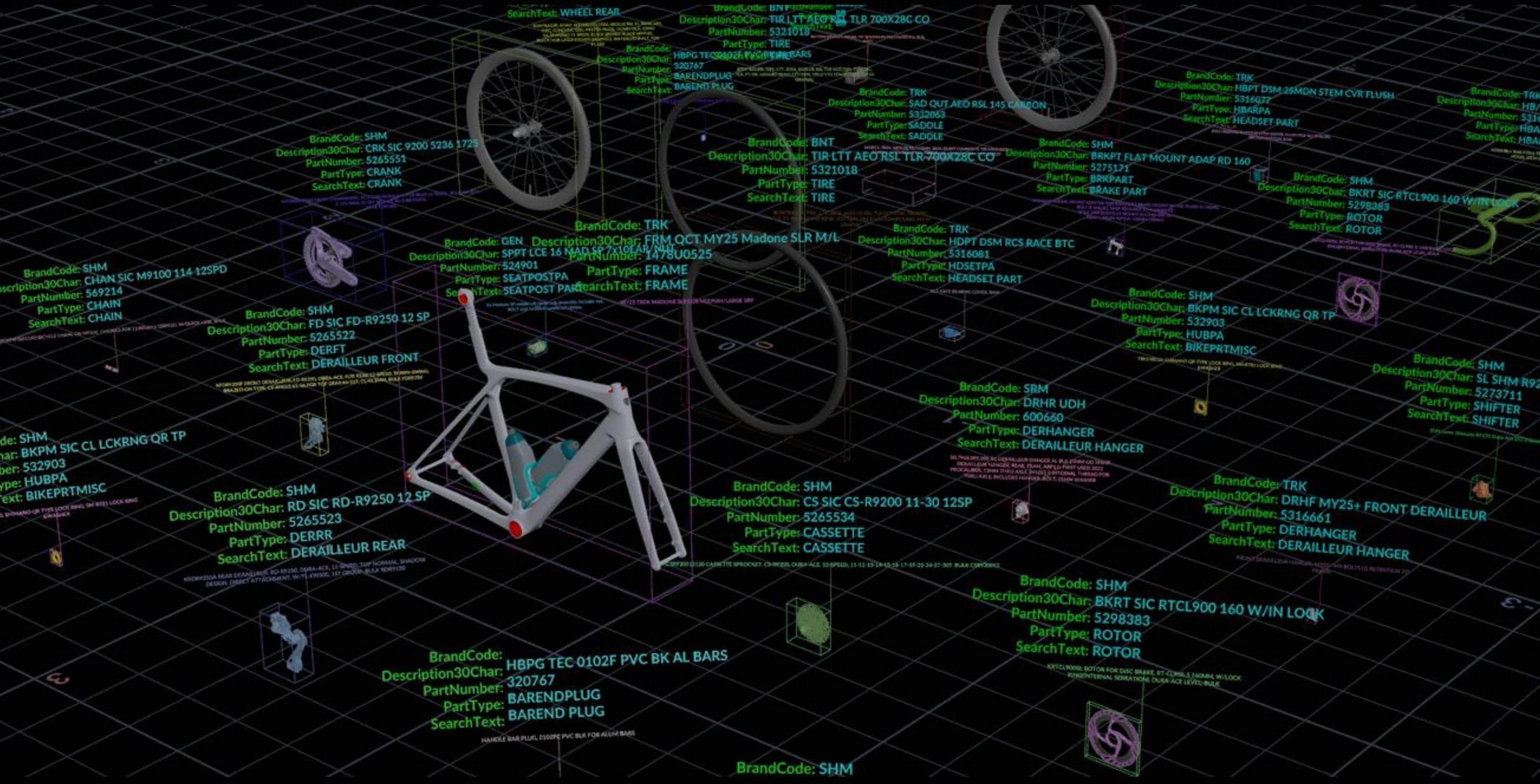
The resulting USD definition is rich in both PLM and engineering source data while maintaining appropriate composition arcs. Additional LODs are incorporated for offline rendering and real-time integrations.
Procedural Dependency Graph
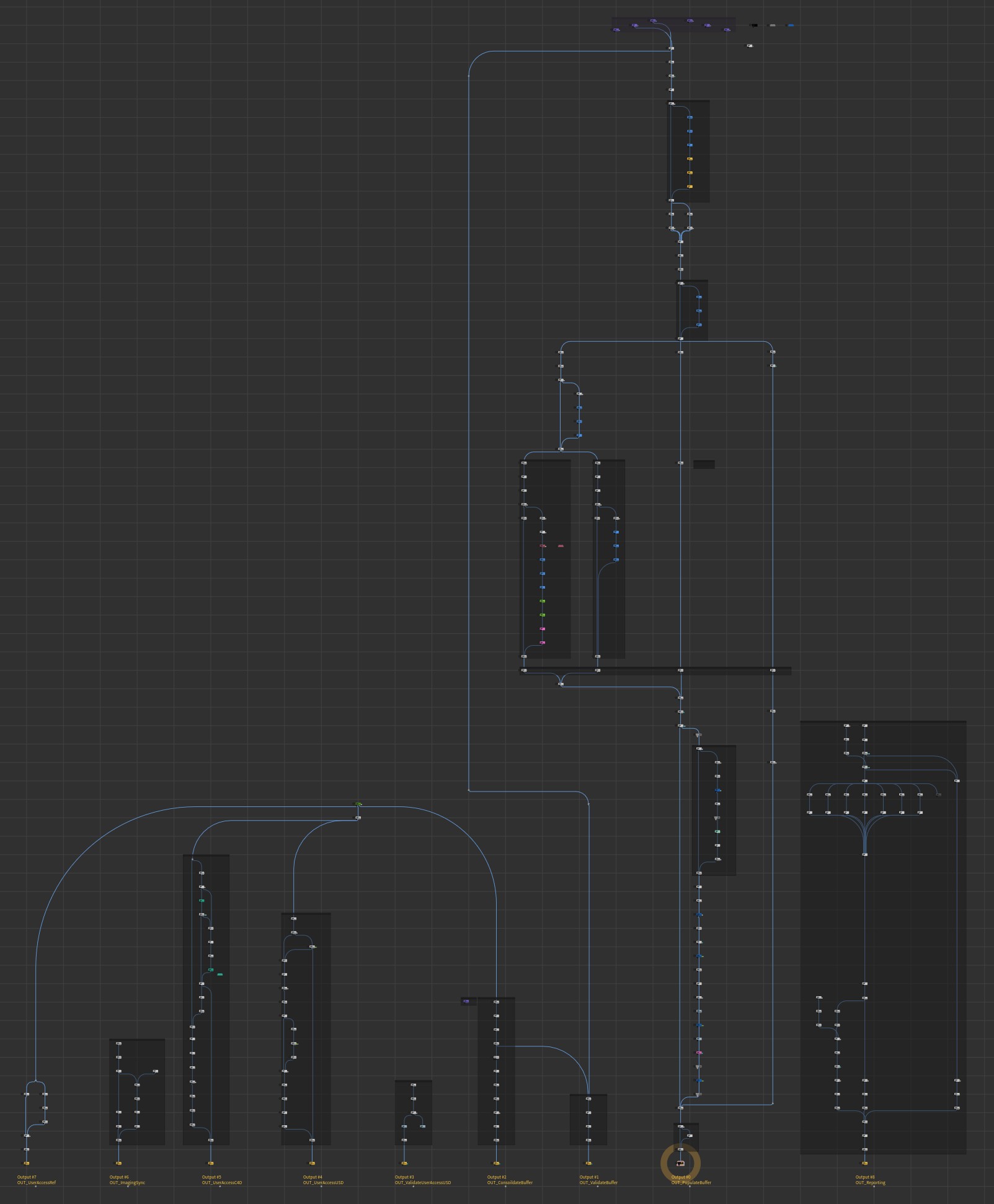
Top-level PDG graph executed headlessly as the orchestration layer. PDG schedules work, manages retries, and calls backend Python interfaces across the toolchain (ingestion, metadata joins, meshing, and USD publishing).
Additional Breakdown
There are three primary sub-systems that comprise the pipeline. A review of each can be found in Projects.