WebGL Viewer Benchmark
A Three.js WebGL proof of concept built to validate real-time viewing performance for a production bike model. The focus is viability: smooth interaction, acceptable load times, and predictable behavior across typical hardware.
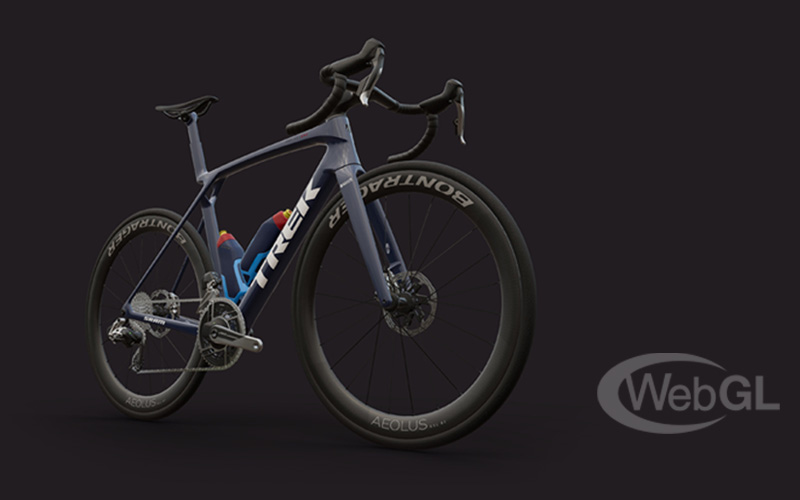
This project answers one practical question: Is a browser-based 3D viewer viable for a model derived from CAD data, produced by a deterministic pipeline?
Overview
CAD-derived models often arrive with dense geometry that traditionally forces time-intensive manual remodeling. That slows throughput and pulls focus away from higher-value work.
This study evaluates whether a CAD-derived mesh can be used in a WebGL viewer without extensive hand cleanup. The test asset was generated by my pipeline backend with performance targets in mind.
Why this matters
This is a bridge between pipeline output and end-user delivery. If the web viewer can handle a bike model at acceptable responsiveness, it becomes a credible surface for internal reviews, lightweight configurators, and digital twin previews.
Results
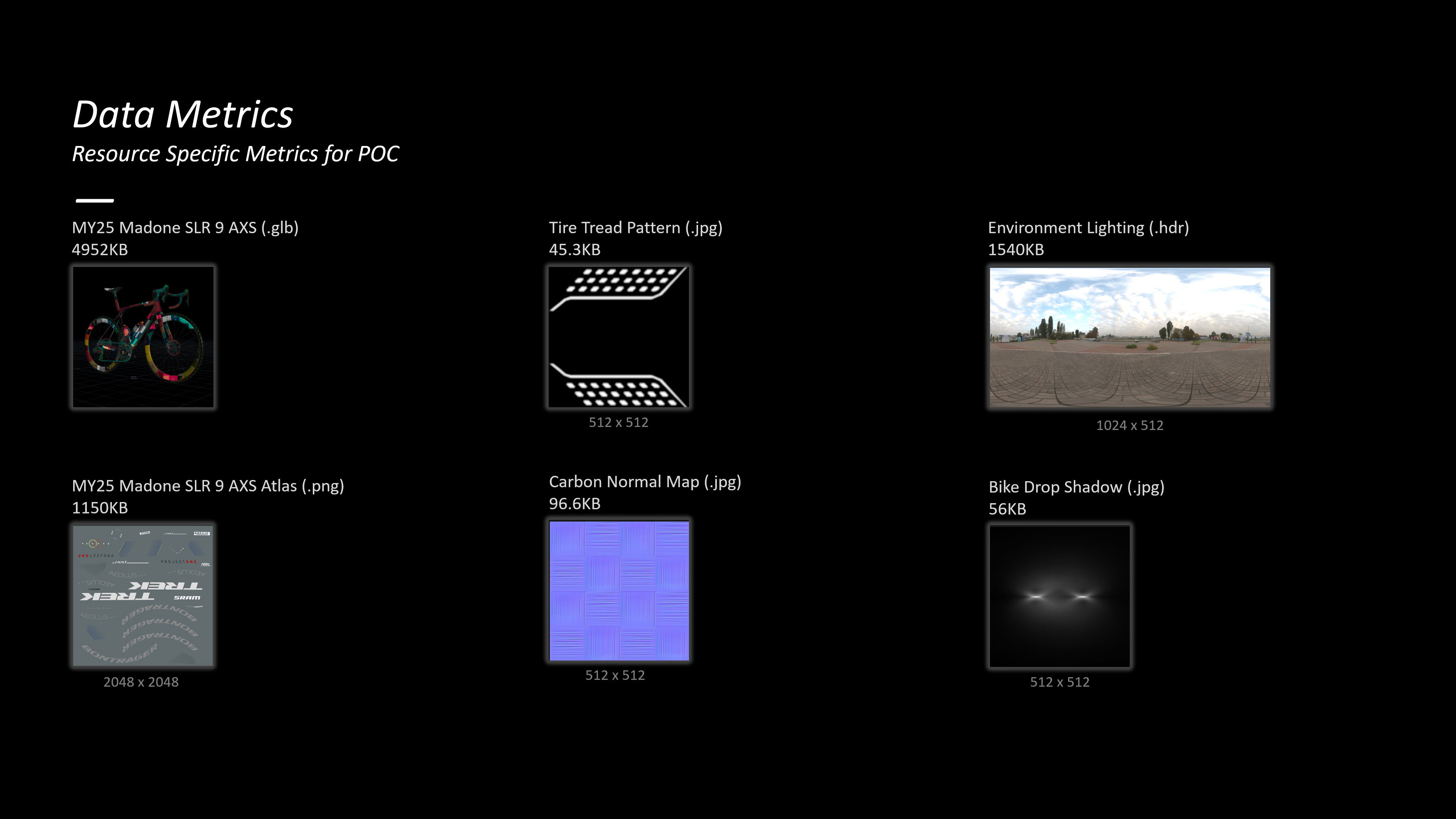
- Mesh (GLB): ~4.95 MB (Draco-compressed)
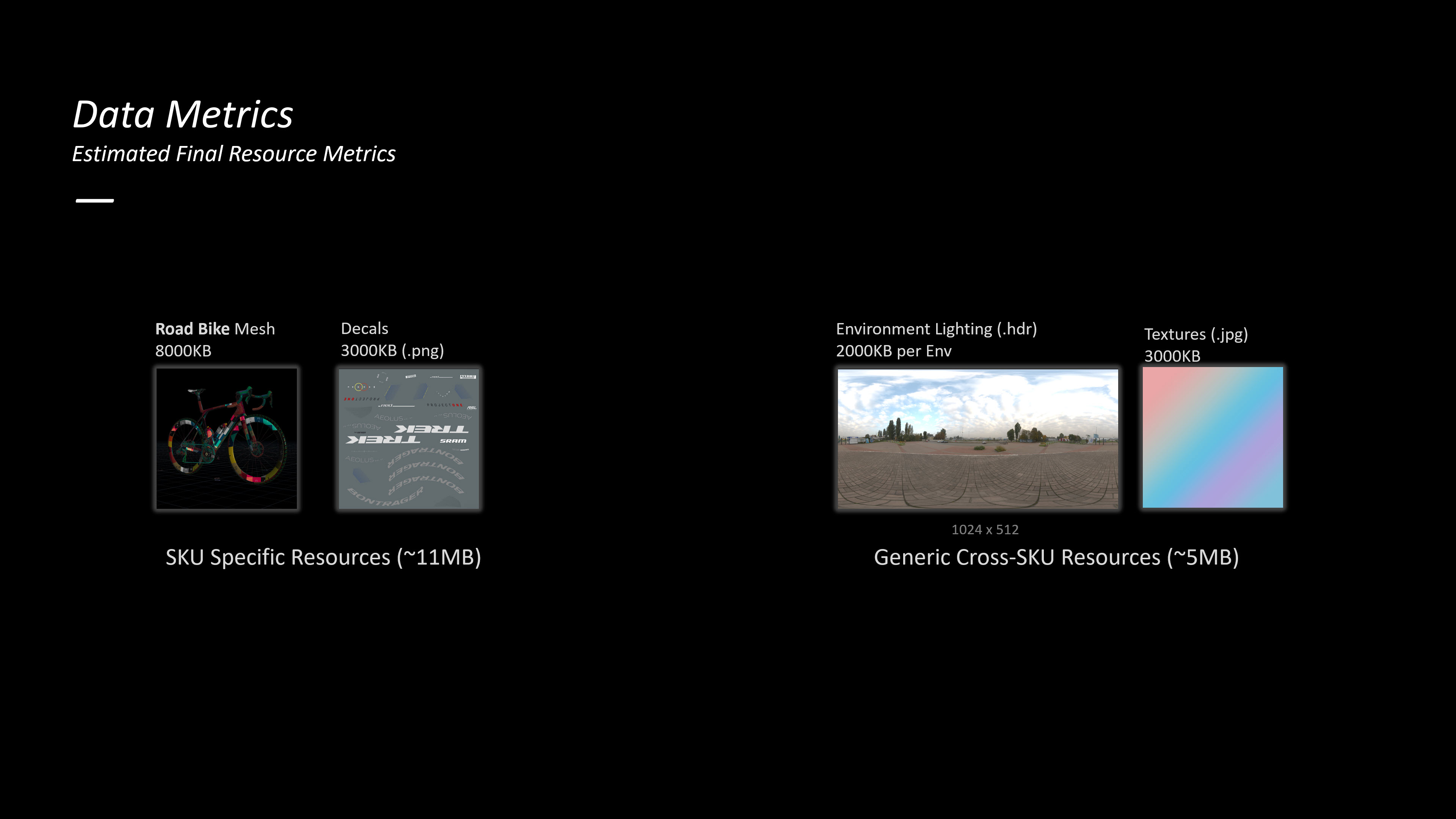
- Estimated total payload: ~16 MB (≈11 MB SKU-specific + ≈5 MB shared)
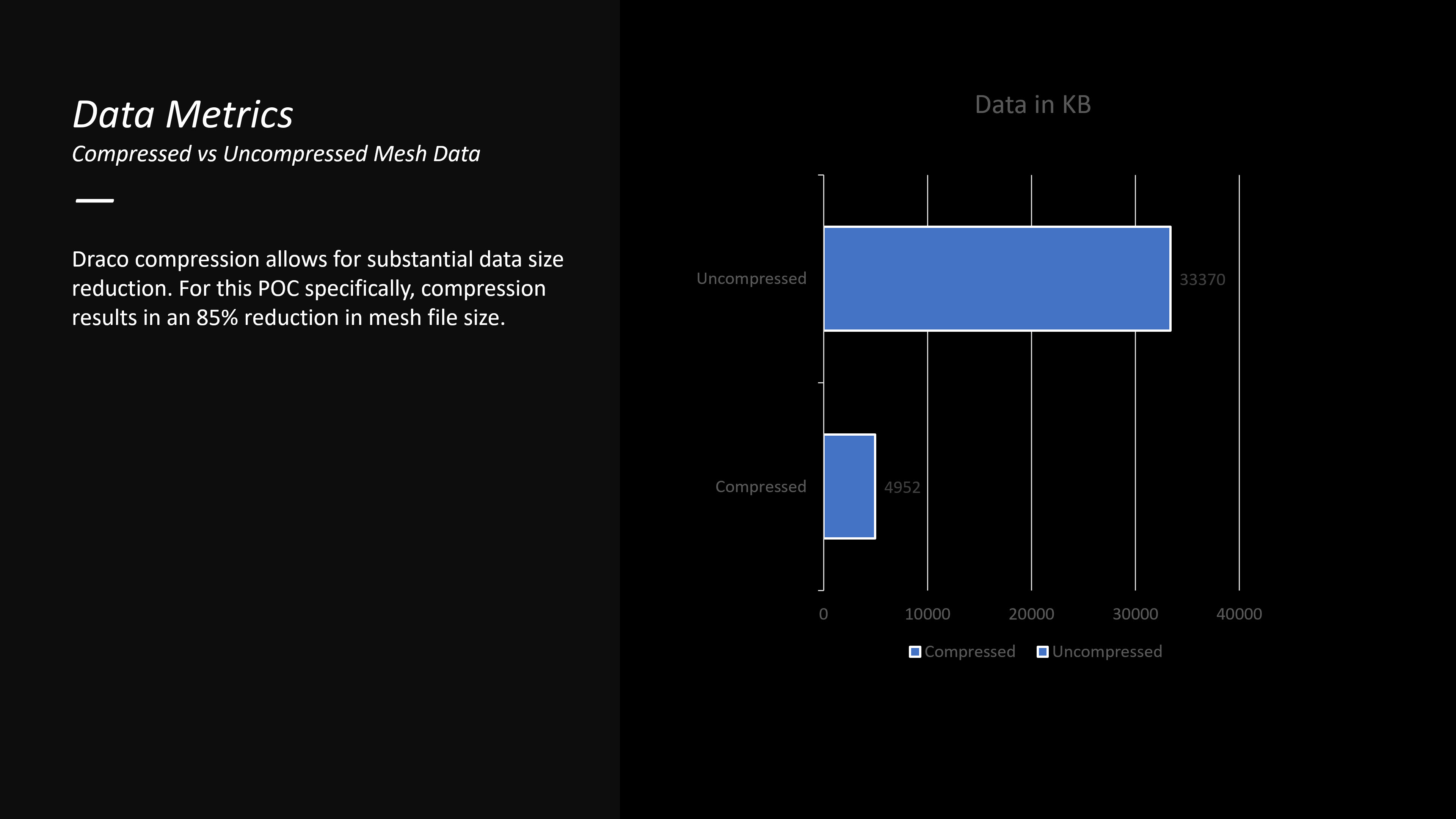
- Draco impact: ~85% mesh size reduction (33.4 MB → 5.0 MB)
Ownership
I built the viewer and structured it specifically as a viability benchmark. The emphasis is repeatability and actionable findings rather than polish.